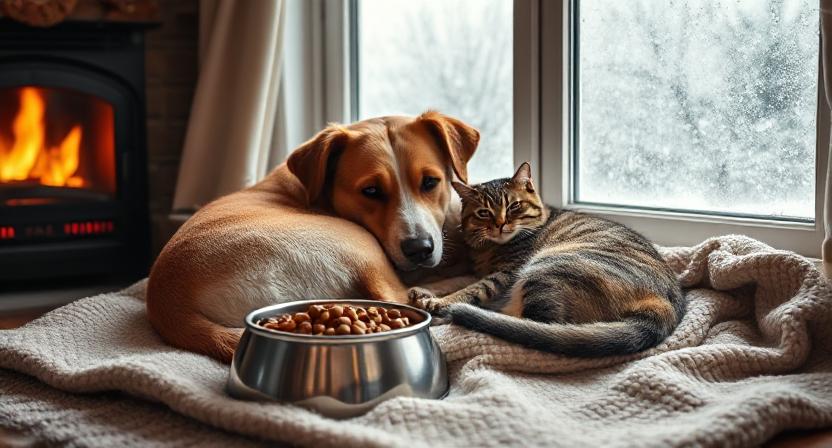
It happens every year. The air gets crisp, the days get shorter, and we start swapping out our routines for winter ones. We dig out our heavy coats, maybe change our own diets to include more hearty soups and stews, and spend more time cozied up indoors.
And if you’re a pet owner, you’ve probably found yourself looking at your dog or cat and wondering, “Should I be changing what you’re eating, too?”
It’s a great question, and one that doesn’t have a simple yes-or-no answer. The truth is, it completely depends on your pet’s lifestyle. So, let’s break down the facts and myths about winter nutrition for our furry family members, without any confusing jargon.
The Great Calorie Debate: More Food or Less?
This is the core of the winter diet question. The biggest factor isn’t the temperature itself; it’s how the temperature changes your pet’s activity level.
The Case for Fewer Calories (For Most Pets)
Let’s be real. When it’s cold and dark outside, our motivation to go for that long, energetic walk often plummets. And if you’re less motivated, chances are your pet’s exercise routine is suffering, too.
- The Couch Potato Effect: Shorter walks, less time running in the yard, and fewer trips to the dog park all mean your pet is burning significantly fewer calories. If you continue to feed them the same amount they ate during their more active summer months, those unused calories will turn into extra weight.
- Why Winter Weight Gain Matters: A little extra fluff might seem cute, but it’s hard on your pet’s body. It can worsen joint issues (which often feel stiffer in the cold), put strain on the heart, and lead to other health problems. Keeping your pet at a healthy weight is one of the most important things you can do for their overall well-being.
Your Simple Check: Don’t just rely on the scale. Run your hands over your pet’s ribs. You should be able to feel them easily beneath a thin layer of fat. If you have to press hard, they might be getting a bit heavy.
The Case for More Calories (For Some Pets)
Now, for the exceptions. Certain pets might actually need a boost in calories during the colder months.
- The Outdoor Enthusiast: Does your dog join you for long winter hikes, skijoring, or extended play sessions in the snow? Running through deep powder is incredibly demanding, and their body burns extra energy just to maintain its core temperature. These highly active dogs may need more food on their adventure days.
- The “Always-Cold” Pet: Some breeds are just less equipped for the cold. This includes small dogs, thin-skinned breeds like Greyhounds, or pets with very short hair. If your pet is constantly shivering or seeking heat, their body is working overtime to stay warm, which burns extra calories.
The Hidden Winter Danger: Dehydration
It sounds counterintuitive, but dehydration is a real risk in winter.
- Dry Air, Inside and Out: Heated indoor air is very dry, and cold outdoor air doesn’t hold much moisture. Your pet loses water with every breath they take.
- Frozen Water Bowls: An outdoor water bowl is useless if it’s frozen solid.
- Lower Thirst Drive: Animals (and people) often don’t feel as thirsty in the cold, even when their bodies need fluids.
Dehydration can lead to dry, itchy skin and other health issues.
Easy Hydration Tips:
- Refresh their water bowl with cool, fresh water several times a day.
- Add a splash of low-sodium chicken or beef broth (no onion or garlic!) to their food.
- On long walks, bring a collapsible bowl and a bottle of water.
Other Winter Considerations
Paw Care: Wipe your dog’s paws after walks to remove ice, salt, and harmful chemicals. This prevents them from licking off toxins and stops ice balls from forming between their pads.
Joint Health: Cold weather can make arthritis stiffness worse. If you have an older pet, talk to your vet about joint supplements, and remember that keeping them lean is the best thing for their joints.
FAQs
Q: My indoor cat never goes outside. Should I change her diet?
A: Probably not. Her environment is climate-controlled, so her needs are consistent. Just watch her weight if she becomes less active, and focus on keeping her hydrated.
Q: My dog seems hungrier in the winter. Should I feed him more?
A: Not necessarily. Boredom can mimic hunger. Ensure he’s getting enough mental and physical stimulation indoors. If his activity has genuinely increased, a small food increase is okay. If he’s a couch potato, stick to his normal portions.
Q: What’s the number one rule for winter pet nutrition?
A: Observe your individual pet. Adjust their food based on their actual activity level, not the season. When in doubt, a quick chat with your vet is always the best move.
The Final Scoop
So, should you change your pet’s diet in the cold? The answer is a mindful “maybe.”
For most of our pets, winter means less activity, which means they might need a little less food. For the adventurous, outdoor-loving few, they might need a bit more. The key is to watch your own pet, adjust as needed, and always ensure they have plenty of fresh water.
By paying a little extra attention, you can help your best friend stay happy, healthy, and comfortable all winter long.