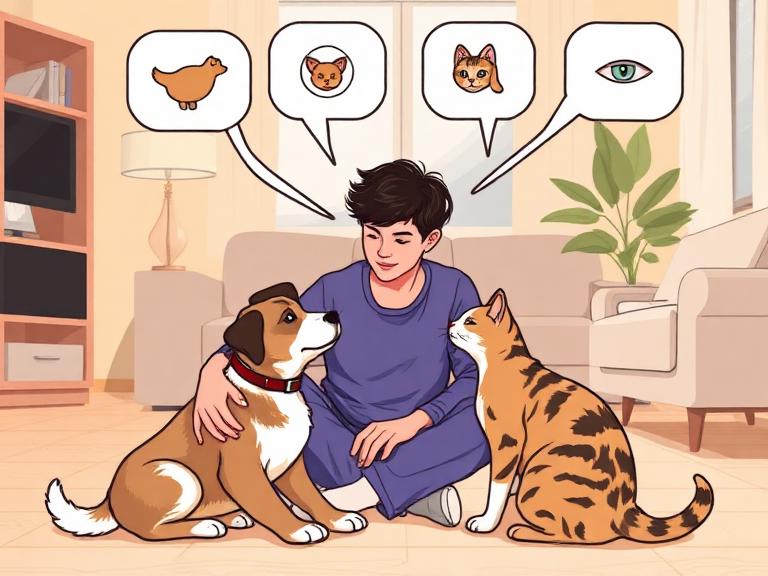
Ever felt like you’re living with a furry little mystery? You’re not alone. Your dog’s intense stare or your cat’s seemingly random zoomies aren’t just quirks—they’re a full-blown conversation happening right in front of you. Our pets are talking to us all the time, not with words, but with a complex language of tail wags, ear flicks, body shifts, and sounds.
Learning this language is the closest thing to a real-life superpower a pet owner can have. It deepens your bond, prevents misunderstandings, and can even keep everyone safer. Let’s ditch the guesswork and become fluent in “Dog” and “Cat.”
Part 1: Decoding Your Dog’s Secret Language
Dogs are often more expressive than cats, but their signals can still be misinterpreted. It’s never about a single gesture; it’s about reading the whole body picture.
The Tale of the Tail (It’s Not Just “Happy Wagging”)
Forget the simple myth. Tail position and speed are like emotional punctuation.
- High & Stiff Wag: This is alertness, arousal, or potential tension. It could be a dog seeing a squirrel (excited arousal) or assessing a new, uncertain visitor (apprehensive arousal). Context is key.
- Broad, “Whole-Bum” Wag: This is the classic happy, relaxed greeting. The body is usually loose and wiggly.
- Low, Slow Wag: Often signals insecurity, appeasement (“I’m not a threat”), or uncertainty. Think of a dog approaching someone new cautiously.
- Tucked Tight Under Belly: This is fear, stress, or submission. Your dog is feeling very uncomfortable.
Ears: The Satellite Dishes of Emotion
- Forward & Perked: Focused, engaged, interested. “What’s that sound?!”
- Flattened or Pinned Back: This is a major red flag. It can signal fear, anxiety, or aggression. A fearful dog with pinned ears is saying, “I am scared and might feel the need to defend myself.”
The Eyes Have It: Windows to the Canine Soul
- Soft Gaze, Blinking: A relaxed, happy dog. You can practice “soft eyes” with them to build connection.
- Hard, Direct Stare: A challenge or threat in dog language. Never punish a dog by staring them down; it escalates tension.
- “Whale Eye” (Whites of Eyes Showing): When a dog turns its head away but keeps its eyes fixed on something, showing the whites. This is a clear sign of anxiety or stress. They’re uncomfortable with whatever is in their periphery. Common during hugs, when guarding a toy, or feeling cornered.
The Overall Body: The Big Picture
- Loose, Wiggly, “Squishy” Body: All is well. This is a confident, relaxed dog.
- Stiff, Frozen Posture: High alert. Something has their full, tense attention. This often precedes a reaction.
- Play Bow (Front down, bum up): The universal “Let’s play!” signal. But it can also be used to diffuse tension, meaning, “What I just did was playful, not a threat.”
- Yawning, Licking Lips (When Not Hungry), Shaking Off: These are often calming signals or displacement behaviors. Your dog is trying to self-soothe or communicate that a situation is stressful. It’s their way of saying, “I’m feeling a bit overwhelmed.”
Part 2: Deciphering Your Cat’s Enigmatic Signals
Cats are subtler masters of communication. Their signals are often more nuanced, but just as telling.
The Feline Tail: A Mood Meter
- Question Mark Tail (Upright with a Curved Tip): The ultimate friendly greeting! Your cat is happy to see you.
- Puffed-Up Tail: Fear or feeling threatened. They’re trying to look bigger to scare off a perceived threat.
- Low, Twitching Tail: Irritation or over-stimulation. This is the classic “petting-induced aggression” warning. Stop petting now!
- Slow, Gentle Swish: Focused concentration (e.g., watching a bird).
- Thumping, Forceful Lashing: High agitation, annoyance. A clear “Back off” message.
Those Inscrutable Eyes & Ears
- Slow Blink: A “cat kiss.” This is a huge sign of trust and affection. You can slow blink back to tell them you love them too.
- Dilated Pupils (Big Black Circles): Can mean excitement (during play) or fear/anxiety. Again, context matters.
- Ears Forward: Curious and engaged.
- Ears Swivelled Backwards or Flattened (“Airplane Ears”): Annoyance, fear, or aggression. A major warning sign.
What Their Body is Telling You
- Kneading (“Making Biscuits”): A holdover from kittenhood, signaling contentment, comfort, and safety.
- Showing Belly: This is often a sign of trust, not an invitation for a belly rub (which many cats find threatening). They feel safe enough to expose their most vulnerable area.
- Arched Back with Flat Fur: A Halloween-cat pose signaling fear, trying to appear larger.
- Arched Back with Raised Fur: Combined with a puffed tail, this is extreme fear or aggression.
- Rubbing Against You: This is scent-marking. They are claiming you as “theirs” and mixing their scent with yours, which is a great compliment.
Common Cat Sounds Decoded
- Purring: Usually contentment, but can also be self-soothing during pain or stress. Check the context.
- Chirping/Chattering: Often directed at prey (like birds out a window). It’s thought to be frustration or instinctual excitement.
- Hissing/Growling: A definitive, unmistakable sign of fear, anger, or feeling threatened. Give them space immediately.
Your Day-to-Day Decoder Cheat Sheet
- Before the Vet: Watch for low tail, pinned ears, hiding, or excessive grooming (in cats). Using a calming pheromone spray in the carrier can help.
- During Greetings (Dogs): If a guest is met with a stiff body, low tail, and whale eye, instruct them to ignore the dog and let the dog approach first. Don’t force an interaction.
- Petting Sessions (Cats): Watch for tail twitching, skin rippling, or ears going back. These are “stop now” signals. Respect them to avoid a scratch.
- At the Dog Park: A play bow is good. A stiff, high-tailed approach with a fixed stare is not. Learn to differentiate play from tension.
FAQs:
Q: My dog wags his tail when I come home, but sometimes he also pees a little. Is that still happy?
A: Yes, this is likely submissive or excitement urination. It’s an involuntary reflex in some young or overly submissive dogs triggered by big emotions (like your exciting return!). Keep greetings calm and low-key, and avoid direct eye contact or leaning over them when you first walk in.
Q: My cat purrs loudly when I pet her, but then suddenly bites me. Why?
A: This is classic overstimulation or “petting-induced aggression.” The purring was genuine, but cats have a threshold. The bite is their way of saying “ENOUGH.” Watch for the warning signs (twitching tail, flattened ears, skin rippling) and stop petting before the bite happens.
Q: What does it mean when my dog licks me constantly?
A: It can have several meanings: affection (like grooming a pack member), attention-seeking (“hello, look at me!”), taste (you’re salty!), or even anxiety/ appeasement. Look at the bigger context of their body language.
Q: My cat follows me everywhere and stares at me. Is this a problem?
A: Not usually! A slow, soft blink with the stare is a sign of affection. A hard, unblinking stare could be a demand (for food, play) or just curiosity. If it feels intense, try slow blinking back or engaging them with a toy.