
Is your dog barking non-stop? Cat scratching the couch again? Or maybe your bunny’s forgotten the litter box? Don’t worry — you’re not alone! These little challenges are part of sharing life with pets. But here’s the good news: most common behavior problems can be fixed with patience, consistency, and positive training.
This isn’t about yelling or punishment. It’s about teaching your pet what to do — and rewarding them when they get it right. Let’s walk through some of the most common pet behaviors and how you can gently guide your furry (or feathery or scaly) friend toward better habits.
Why Positive Training Works
Before we start, here’s what you need to know:
- Reward what you like. Don’t just stop bad behavior — show your pet what you want instead and reward it!
- Treats, praise, and play = powerful tools. Pets learn best when they feel safe and encouraged.
- Set them up for success. Don’t leave shoes out if your puppy likes to chew. Help them make the right choice!
- Be consistent. Everyone in your home should use the same words and rewards.
- Check with a vet first. Sometimes health issues cause behavior changes.
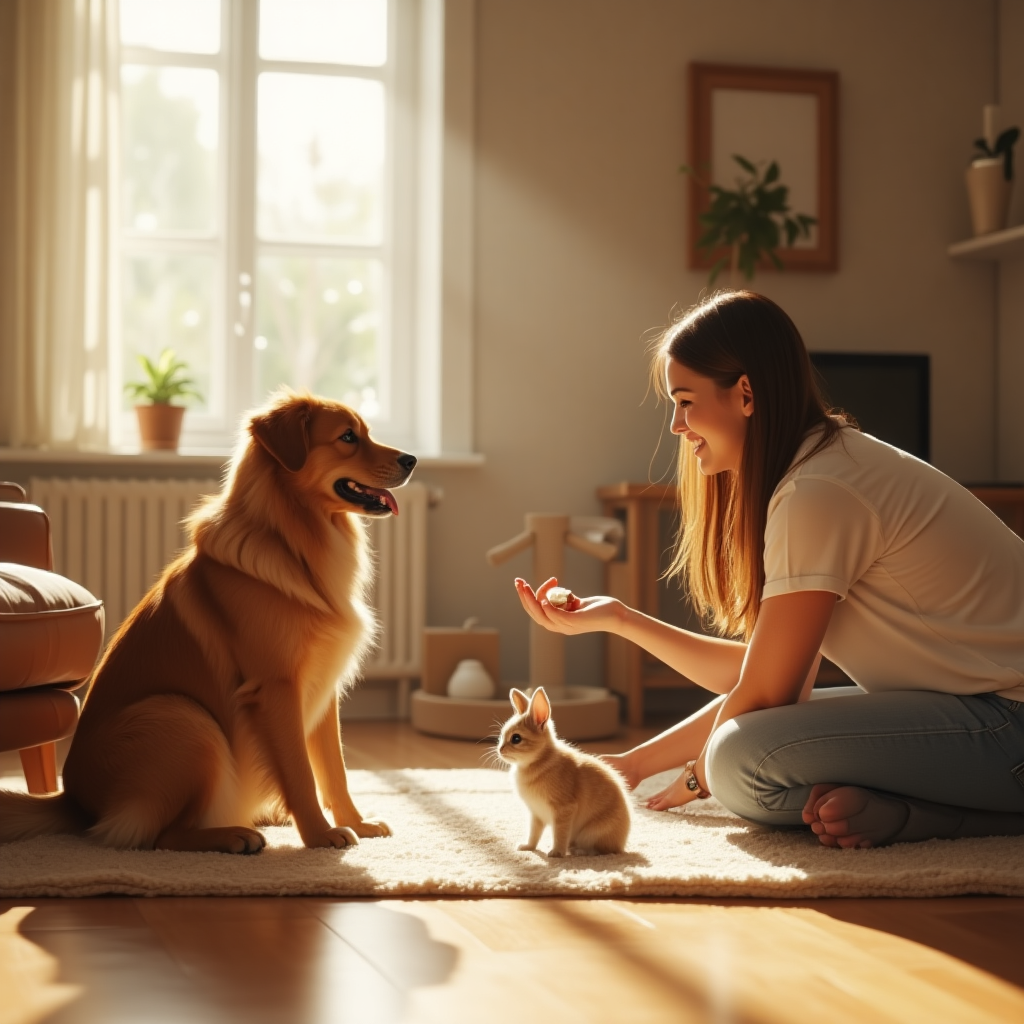
Common Pet Behaviors and Easy Fixes
1. Too Much Barking, Meowing, or Squawking?
What to do:
- When your pet is quiet, even for a second, say “Yes!” and give a treat.
- Once they start understanding, add a cue like “Quiet” when they stop making noise.
- Slowly increase the time they need to be quiet before getting a reward.
- Teach an alternative, like “Go to your bed” when a trigger happens (like the doorbell).
Tip: If your pet barks or cries for attention or food, ignore them completely until they stop. Then reward the quiet!
2. Chewing the Wrong Things
What to do:
- Keep tempting stuff out of reach (shoes, wires, remote controls).
- Offer your pet a fun toy or chew when they go for the wrong thing.
- Praise them every time they chew their own toy.
- Try rotating toys to keep things interesting.
- Teach “Leave it” — super helpful in many situations!
Tip: Puppies and kittens need extra supervision — use a leash or playpen to help guide them.
3. Scratching Furniture
What to do:
- Put scratching posts or pads right where your cat already likes to scratch.
- Add some catnip or play near the post to make it fun.
- Praise and reward your cat when they scratch in the right place.
- Cover furniture temporarily with sticky tape or plastic to make it less appealing.
Tip: Some cats like vertical posts, others like horizontal pads — try both!
4. Litter Box Trouble
What to do:
- Rule out health issues with a vet visit first.
- Keep the box clean, big enough, and in a quiet spot.
- Use unscented litter your pet prefers.
- For new pets or accidents, start with a smaller area, then give more freedom as they improve.
- Don’t punish! Just clean with an odor remover and encourage proper use.
Tip: For rabbits or ferrets, try putting hay in the litter box — it encourages them to go there naturally.
Tools That Help
- Yummy treats (small and soft work best)
- Clickers or a happy marker word like “Yes!”
- Gates or pens to manage space
- Chew-proof cords, bitter spray, and puzzle toys
When to Get Help
Sometimes you’ll need a pro — and that’s totally okay! Call a certified trainer or behaviorist if:
- Your pet shows aggression (growling, biting)
- They seem very scared or anxious
- Nothing is working, even after a lot of effort
Make sure they use kind, positive methods — no harsh punishments.
Final Thoughts: Training = Teamwork
Every pet learns at their own pace, and every pet parent makes mistakes sometimes. That’s normal! The important thing is to keep going, stay positive, and celebrate the small wins. You’re not just training behaviors — you’re building a stronger, happier bond with your beloved critter.
Frequently Asked Questions (FAQs)
Q1. What if my pet isn’t food-motivated? How can I reward them?
A: Try using praise, petting, playtime, or favorite toys. Some pets respond better to a game of tug or a walk than a treat — it’s all about what your pet loves most!
Q2. How long should I train my pet each day?
A: Short sessions are best — even just 5–10 minutes a few times a day works great. Keep it fun, end on a good note, and be consistent!
Q3. My pet listens to me but not others in the house. Why?
A: They’re probably getting mixed signals. Make sure everyone uses the same words and rewards the same behaviors. Training works better when the whole family is on board.
Q4. Is it too late to train an older pet?
A: Nope — it’s never too late! Older pets can learn just as well as younger ones. You might need a little more patience, but they’ll get it with love and consistency.
Q5. Can I use a spray bottle or loud noise to stop bad behavior?
A: It might stop the behavior in the moment, but it can make your pet scared or anxious, and it doesn’t teach what to do instead. Positive reinforcement builds trust and lasting results.
Q6. My pet is still having accidents. Am I doing something wrong?
A: Probably not! House training takes time, especially for young or rescued pets. Go back to basics, reward the right spots, and talk to your vet if it continues — there might be a medical reason.