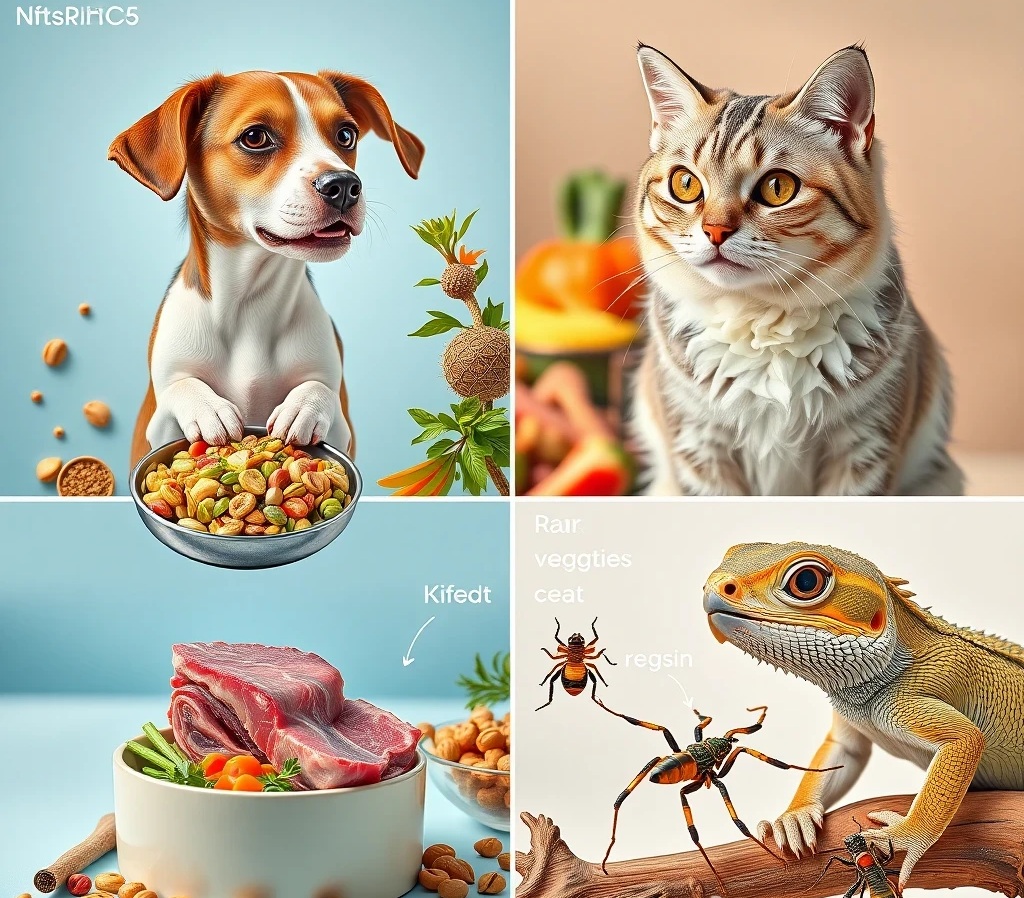
Why One Diet Doesn’t Fit All Pets
Just like humans, dogs, cats, birds, and reptiles have unique biological needs. Feeding a cat like a dog (or worse, a snake like a hamster) can lead to malnutrition, obesity, or even fatal health issues.
Here’s what each species must have in their diet and what could harm them.
Dogs: The Opportunistic Omnivores
Core Needs:
- High-Quality Protein (25-30% of diet) – Chicken, beef, fish
- Healthy Fats (10-15%) – Omega-3s for skin & coat
- Moderate Carbs – Sweet potatoes, brown rice (but no grains if allergic)
- Fiber – Pumpkin, peas for digestion
Dangerous Mistakes:
- Onions, garlic, grapes (toxic)
- Too many carbs (leads to obesity)
- Cat food long-term (too high in fat/protein)
Best Commercial Food?
Look for AAFCO-approved labels with real meat as the first ingredient.
Cats: Obligate Carnivores (They Need Meat to Survive!)
Core Needs:
- Animal Protein (30-40%) – Chicken, turkey, fish (no vegan diets!)
- Taurine (Essential Amino Acid) – Prevents heart disease & blindness
- High Fat (20-25%) – For energy
- Minimal Carbs – Unlike dogs, cats don’t need grains
Dangerous Mistakes:
- Dog food (lacks taurine → deadly)
- Raw fish daily (thiamine deficiency)
- Too many dry carbs (linked to diabetes)
Best Commercial Food?
Wet food > Dry food (higher moisture, lower carbs). Check for taurine on the label.
Birds: Seed-Only Diets Are a Death Sentence
Core Needs (Varies by Species):
- Pellets (50-70%) – Fortified with vitamins
- Fresh Veggies (20-30%) – Leafy greens, carrots, peppers
- Limited Seeds (10%) – High in fat (only as treats)
Dangerous Mistakes:
- Only seeds (fatty liver disease)
- Avocado, chocolate, caffeine (toxic)
- Dairy (birds are lactose-intolerant)
Best Diet?
Harrison’s Bird Pellets + daily veggies for most parrots.
Reptiles: Carnivores vs. Herbivores
Carnivores (Snakes, Monitors):
- Whole prey (mice, insects)
- Calcium + Vitamin D3 (prevents metabolic bone disease)
Herbivores (Tortoises, Iguanas):
- Dark leafy greens (kale, dandelion greens)
- Limited fruit (high sugar)
Dangerous Mistakes:
- Feeding iceberg lettuce (no nutrients)
- No calcium supplements (leads to brittle bones)
Best Diet?
Gut-loaded insects (for carnivores) or organic greens (for herbivores).
Rabbits & Small Herbivores: Fiber is Life
Core Needs:
- Unlimited Hay (80%) – Timothy hay for digestion
- Fresh Greens (15%) – Romaine, cilantro, basil
- Limited Pellets (5%) – Too many cause obesity
Dangerous Mistakes:
- Lettuce-only diet (no fiber → GI stasis)
- Too many carrots (high sugar)
Best Diet?
Oxbow Hay + fresh greens daily.
FAQ: Pet Nutrition Myths Debunked
Q: Can dogs eat cat food in a pinch?
A: Short-term, yes—but long-term, cat food is too high in fat/protein and lacks fiber, leading to pancreatitis in dogs.
Q: Why can’t cats be vegan?
A: They need taurine, arachidonic acid, and vitamin A—all found only in animal tissue. Vegan cats risk heart failure and blindness.
Q: Do reptiles really need UVB light?
A: Yes! Without UVB, they can’t metabolize calcium, leading to metabolic bone disease (soft, deformed bones).
Q: Are raw diets safe for pets?
A: Risky if not balanced. Raw meat can carry bacteria (Salmonella), and homemade diets often lack key nutrients. Consult a vet first.
Final Verdict: Feed for Their Biology
- Dogs = Balanced omnivores (protein + carbs)
- Cats = Meat-only survivalists (taurine is a must)
- Birds = Pellets + veggies (seeds = junk food)
- Reptiles = Species-specific (carnivore vs. herbivore)
- Small mammals = Hay-based (fiber prevents deadly GI stasis)
Moral of the story? Never assume one pet’s diet works for another—research before feeding!