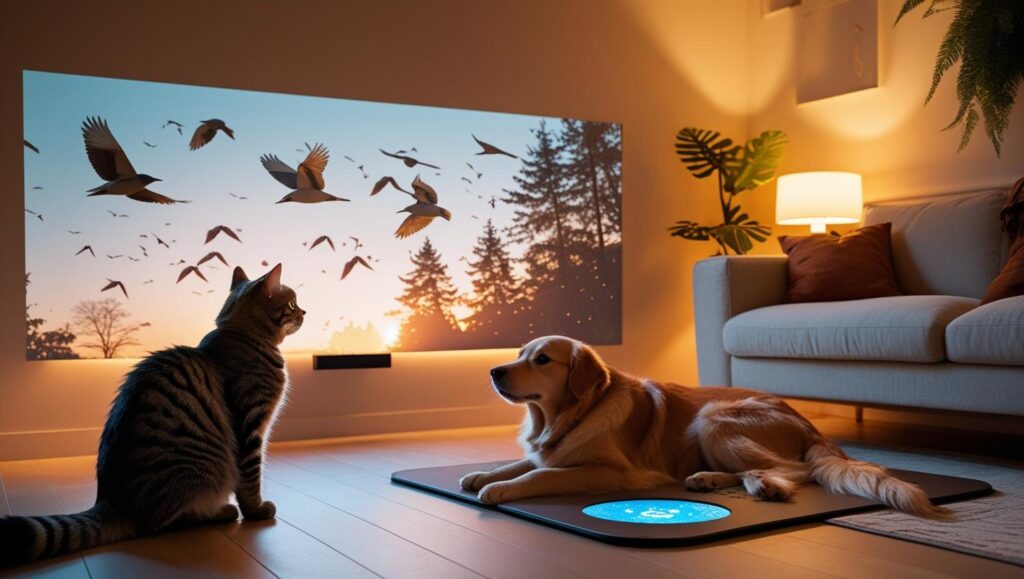
Hey pet people!
Let’s talk about something that sounds totally futuristic but might be creeping into our homes sooner than you think: using virtual reality-inspired tech to boost our pets’ mental and emotional well-being.
Forget sci-fi scenes of a pug in goggles (hilarious though that is!). This isn’t about headsets—it’s about harnessing the core ideas of VR (immersion, interactivity, sensory richness) to make life more interesting for our indoor companions.
The Problem: The Captive Conundrum (Even in Comfy Homes)
Our pets live in our world. A dog might walk the same neighborhood loop. A cat may stare out the same window. Birds, fish, reptiles—all experience a tiny slice of the natural world. While we give them love, safety, and care, their natural instincts often get stifled.
This can lead to:
- Boredom & Frustration: Pacing, barking, excessive grooming, chewing, feather-plucking.
- Anxiety & Stress: Reactivity to noises or being left alone.
- Under-Stimulation: Especially in older pets, this can cause cognitive decline.
We already try: puzzle feeders, catios, foraging toys. But is there a way to make those efforts more dynamic, immersive, and tailored to their instincts?
VR’s Potential: Not Screens—Smart Stimulation
Let’s break VR down. It’s not just visuals—it’s about building multi-sensory, interactive environments. Applied to pets, it means engaging them in more natural, stimulating ways using sound, scent, movement, and light—not just visuals.
1. “Safari Mode” for Indoor Cats
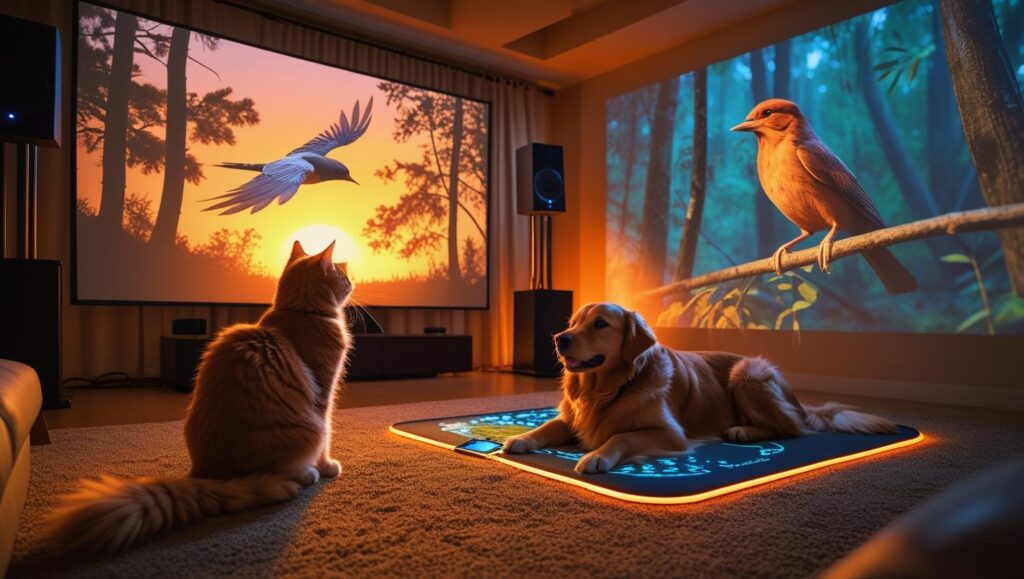
- Projected Prey: Move beyond the laser pointer! An algorithm-controlled light mimics unpredictable prey movements. Add subtle rustling sounds through hidden speakers.
Sight + Sound = Instinctive Hunt - Window to the World: A screen placed at a cat’s favorite perch showing high-res bird feeder scenes or outdoor landscapes. Think of it as “cat TV,” but responsive and realistic.
2. Canine Calm & Confidence Building
- Controlled Exposure Therapy: A setup with low-frequency rumbles (via vibration mat), dim flashes (mimicking lightning), and diffused scents. Gradual, gentle exposure to common triggers like thunderstorms could build resilience.
- Novelty Walks: For urban or mobility-limited dogs, a treadmill or mat paired with screens, fans (pine or ocean scents), and textured walking surfaces (like faux grass or sand mats).
Simulated adventure when real walks aren’t possible.
3. Avian Adventures
- Dynamic Skies: Instead of wallpaper, use curved screens around part of a cage to mimic sunrise, drifting clouds, and sunset. Reinforces natural rhythms.
- Smart Foraging: Puzzle feeders that evolve in difficulty and make insect or rustling sounds when engaged—mimicking natural challenges.
4. Aquatic Ambience (Beyond Bubblers)
- Light & Flow Simulation: Smart LEDs that mimic light filtering through water at different times of day. Adjustable current flows simulate stream or reef conditions.
- Virtual Companions: Projected images of non-threatening schooling fish to trigger shoaling behavior. This adds stimulation without risk.
The Benefits: More Than a Gimmick
This isn’t just fancy décor. It’s about real, measurable improvements in pet well-being:
- Mental Stimulation: Complex puzzles and shifting environments keep pets mentally active.
- Stress Reduction: Controlled, calming environments can ease anxiety.
- Instinct Satisfaction: Mimicking hunting, foraging, and exploration fulfills deep-seated animal drives.
- Improved Health: Less stress and boredom lead to fewer behavior issues and better overall wellness.
Especially for indoor-only or older pets, this can offer the mental gym they desperately need.
Reality Check: Not There Yet (But Getting Close)
Let’s be honest. Most of these systems are still in prototype or DIY stages. The challenges include:
- Sensory Understanding: Tech must be tailored to animal perception (e.g., cats see blue/green better, birds perceive UV).
- Safety & Simplicity: Needs to be chew-proof, pet-safe, and easy to operate.
- Cost & Scale: Many of these setups are still high-end or custom—but that’s changing fast.
Importantly, this is a supplement—not a replacement—for real-life enrichment. Actual walks, snuggles, and outdoor access still reign supreme.
FAQs: Your Pet Tech Questions Answered
Q: Isn’t this just TV for pets?
A: Not quite. It’s about interaction and immersion. Unlike passive videos, these setups are dynamic—reactive to movement, changing over time, or involving scent and sound.
Q: Will my pet even understand it?
A: That’s the frontier! Early results show that prey-mimicking movement or thunder simulation can trigger real instinctive responses—especially when matched to each species’ sensory range.
Q: Can this backfire and increase anxiety?
A: Yes—if poorly designed. It’s crucial that systems start at low intensities and always allow the pet to opt-out. No tech should ever force interaction.
Q: Isn’t this overcomplicating things?
A: Real play is still king. This is for when you’re away, during bad weather, or for pets with special needs. Think of it as the “next-gen Kong toy.”
Q: Will it cost a fortune?
A: Some parts, yes—for now. But projectors, scent diffusers, and smart lighting are already dropping in price. Expect more pet-specific options soon.
Q: Could this work for small mammals or reptiles?
A: Absolutely. Rabbits could benefit from projected tunnels or scent-based puzzles. Reptiles might thrive with dynamic lighting mimicking sun and shadow shifts.
The Hopeful Horizon: Smarter Enrichment Ahead
Future enrichment might include:
- AI-driven projections that respond to your pet’s movement.
- Haptic mats that change terrain texture.
- Scent-based challenges that vary daily.
- Dynamic lighting and soundscapes that match your pet’s activity cycle.
The Takeaway for Pet Lovers
VR for pets isn’t about headsets—it’s about reimagining the spaces they live in to better match their instinctual needs. With thoughtful use of tech, we can help bridge the gap between the living room and the wild, crafting safe, enriching worlds that keep pets curious, calm, and content.
What kind of virtual world would your pet enjoy? A rainforest of rustling leaves? A beach full of curious crabs? A night sky full of fluttering fireflies?
Let your imagination (and theirs) run wild—then build it!