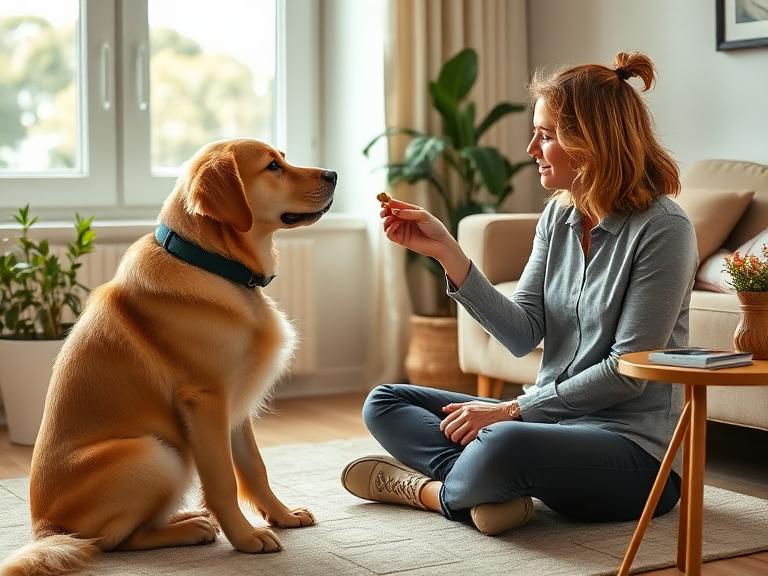
Bringing a dog into your home—whether a playful puppy from a breeder or a rescue with an unknown past—is a rewarding experience. However, it also comes with a clear responsibility: teaching your dog how to navigate a human‑centric world safely and politely. Basic obedience training is not about dominance or drill‑style commands. Rather, it is a structured form of communication that builds trust, prevents behavioural problems, and strengthens the bond between you and your pet.
This guide uses modern, science‑based, positive‑reinforcement methods recommended by veterinary behaviourists and certified professional trainers. Each step is practical and can be integrated into your daily routine, even with a busy work schedule.
Why Basic Obedience Matters
Dogs are increasingly integrated into urban and suburban life. They accompany owners to patio cafés, public parks, pet‑friendly shops, and even office spaces. A dog that has not learned basic manners may become a source of stress rather than joy. Jumping on guests, pulling on the leash, bolting out the front door, or ignoring recall commands can lead to accidents, legal liability, or even rehoming.
Basic obedience training addresses these issues at their root. It teaches your dog how to make good choices, and it gives you the tools to guide them calmly. The five core behaviours covered in this guide—name recognition, sit, stay, leave it/drop it, and loose‑leash walking—are the foundation for a well‑adjusted adult dog.
Step 1: Prepare Your Training Toolkit
Before teaching any specific behaviour, gather the right equipment. Professional trainers agree that the most effective method is positive reinforcement, which means rewarding behaviours you like so they are repeated.
Essential items:
- High‑value treats: Soft, small, and aromatic. Examples include freeze‑dried liver, boiled chicken, or cheese. Avoid large, crunchy biscuits that take time to chew.
- Low‑value treats: Your dog’s regular kibble can be used for easy, familiar behaviours.
- A treat pouch or small container: This keeps rewards accessible and prevents fumbling.
- A clicker (optional): A clicker marks the exact moment your dog performs a desired behaviour. If you prefer not to use one, a verbal marker such as “Yes!” works equally well.
- A standard 6‑foot leash and a well‑fitted flat collar or harness. For loose‑leash walking, a front‑clip harness is often helpful.
Daily life tip: Keep a small supply of treats near your front door and in your car. This allows you to reinforce good behaviour spontaneously, for example when your dog waits calmly before exiting the vehicle.
Step 2: Name Recognition – The Foundation of Attention
Before you can teach “sit” or “stay,” your dog must understand that their name means “look toward the human for guidance or a reward.” Many owners inadvertently teach their dogs to ignore their name by repeating it without follow‑through or by using it in frustrated tones.
The correct procedure:
- Stand or sit near your dog in a quiet room. Say their name once, in a pleasant, neutral tone (e.g., “Bailey”).
- The instant your dog turns their head toward you, mark the behaviour with a click or “Yes!” and give a high‑value treat.
- If your dog does not respond, do not repeat the name. Instead, make a soft noise (like a kissy sound) or show the treat near your face to capture attention, then try again later.
- Practice this 10–15 times per day, gradually adding mild distractions (e.g., a fan running or someone walking by).
Why this works: Your dog learns that hearing their name predicts something pleasant. Over time, this becomes a reliable way to gain focus, even in moderately distracting environments.
Step 3: Teaching “Sit” – The Most Useful Default Behaviour
“Sit” is often the first formal command taught because it is physically incompatible with many problem behaviours such as jumping up, lunging, or running out a door. It is also easy for most dogs to learn.
The luring method (no physical force):
- Hold a treat close to your dog’s nose.
- Slowly lift the treat up and slightly back over the dog’s head, as if you are trying to part the fur between their ears.
- Most dogs will naturally lower their rear to the floor as they tip their head upward to follow the treat.
- The moment the dog’s bottom touches the ground, mark (“Yes!” or click) and give the treat.
- After three to five successful repetitions, begin saying “Sit” just before you move the treat. Eventually, you can fade the lure and use only the verbal cue.
Common mistake: Repeating “Sit, sit, sit” when the dog does not respond immediately. Say the cue once. If no response, go back to luring for a few repetitions. Nagging teaches dogs to listen on the fifth command, not the first.
Step 4: Building a Reliable “Stay”
“Stay” is a life‑saving skill. It prevents your dog from bolting out of a car, through an open gate, or into a busy street. However, “stay” is also one of the more challenging behaviours because it requires self‑control.
The three Ds of stay training: Duration (time), Distance (how far you move away), and Distraction (environmental challenges). Work on only one D at a time.
Step‑by‑step for duration:
- Ask your dog to sit (or lie down).
- With your palm facing the dog like a stop sign, say “Stay” once.
- Wait one second. If your dog remains in place, mark and deliver a treat directly to their mouth (so they do not have to break position to eat).
- Gradually increase the time: two seconds, three seconds, five seconds. If your dog gets up before your marker, you have moved too fast. Shorten the duration and try again.
Adding distance:
Once your dog can hold a stay for five to ten seconds, begin taking one small step backward. Immediately return and reward. Over many sessions, increase the number of steps and the time you stand away.
Release cue: Always teach a clear release word such as “Free,” “Break,” or “All done.” Do not use “Okay,” as this word occurs frequently in normal conversation (e.g., “Okay, I’ll call you later”). The release cue tells your dog the stay is finished.
Step 5: “Leave It” and “Drop It” – Safety on Walks
If you live in a city or suburb, your dog will inevitably encounter hazardous items on the ground: chicken bones, discarded food wrappers, broken glass, or even toxic substances. “Leave it” prevents your dog from picking something up; “Drop it” is for when they already have an item in their mouth.
Training “Leave It”:
- Place a low‑value treat (e.g., a piece of kibble) in your closed fist.
- Present your fist to your dog. They will likely sniff, lick, and paw at it.
- The moment they stop trying and pull their nose away, mark (“Yes!”) and give them a different, higher‑value treat from your other hand.
- Repeat. Once your dog reliably ignores the closed fist, you can progress to an open palm with the treat covered by your thumb, and eventually to a treat on the floor.
Training “Drop It”:
- Offer your dog a toy they like but are not obsessed with.
- While they hold the toy, bring a high‑value treat to their nose. Most dogs will open their mouth to take the treat.
- As they open their mouth, say “Drop it” and mark when the toy falls.
- Give the treat, then immediately return the toy. This prevents “drop it” from becoming a punishment (the toy is not gone forever).
Daily life application: Practice “leave it” with a dropped napkin or a leaf before you ever use it on a dangerous object. Your dog needs to succeed many times before being tested in a real‑world scenario.
Step 6: Loose‑Leash Walking (No Pulling)
Pulling on the leash is one of the most common complaints from dog owners. Fortunately, it is also one of the most solvable problems without aversive tools such as prong or choke collars. The method described below is endorsed by veterinary behaviourists and works for dogs of all sizes.
The “Red Light / Green Light” technique:
- Attach your dog to a standard 6‑foot leash and a front‑clip harness or flat collar. (Front‑clip harnesses reduce pulling leverage.)
- Start walking. As long as the leash remains loose (green light), keep moving forward.
- The instant the leash becomes taut (red light), stop moving. Stand still like a tree. Do not yank or say anything.
- Wait for your dog to turn back toward you or take a step sideways to release tension on the leash. This may take several seconds.
- When the leash is loose again, mark (“Yes!”) and continue walking. You may also reward with a treat at your side to encourage a heel‑like position.
Important: For the first week, your walks will be very short and slow. You might only advance a few houses down the block. That is normal. Consistency for seven days will produce a marked improvement; inconsistency will prolong the struggle.
Integrating Training into Daily Life
Formal training sessions are important, but real progress happens in the small moments of everyday life. Here are practical ways to reinforce obedience without adding extra time to your day:
- Before meals: Ask your dog to sit and wait for five seconds before placing the bowl on the floor.
- At doorways: Practice “stay” before opening any door (front door, car door, crate door). Release only when you are ready.
- During work breaks: Use two minutes to practice “touch” (nose to palm) – a fun behaviour that also improves focus.
- On walks: Ask for a “sit” at every curb before crossing the street. This reinforces impulse control in a natural setting.
- While watching television: Scatter a few treats on the floor and say “leave it.” Practice the exercise for one commercial break.
The goal is to make good manners a habit, not a performance reserved for training sessions.
How Long Does Training Take? Managing Expectations
Every dog learns at a different pace. Puppies under five months have very short attention spans; adolescent dogs (six to eighteen months) often test boundaries; adult and senior dogs may learn more slowly but with greater focus.
Realistic timeline:
- Name recognition: Noticeable improvement within two to three days.
- Sit: Most dogs understand the motion within one session, but reliability with distractions takes one to two weeks.
- Stay (five seconds, close distance): Approximately two weeks of daily practice.
- Loose‑leash walking: Visible improvement in one week, but full reliability often requires four to six weeks of consistent work.
Do not train for long periods. Short, positive sessions of five minutes, repeated three times per day, are far more effective than a single hour‑long session. End each session before your dog loses interest.
A Note on Adolescent “Rebellion” (6–18 Months)
If you have raised a puppy who seemed well‑trained and then, around eight to twelve months of age, began “forgetting” behaviours, you are not alone. This period of development is analogous to human adolescence. Hormones, brain development, and increasing independence contribute to what trainers call “behavioural regression.”
During this phase, lower your expectations. Return to using higher‑value treats, reduce distractions, and reinforce basic behaviours generously. Do not punish your dog for “forgetting”; simply go back a few steps in training. This phase is temporary, and consistent positive guidance will carry you through it.
FAQs:
1. Is it too late to train my older dog?
Not at all. Adult and senior dogs are often easier to train than puppies because they have better impulse control and longer attention spans. The same positive reinforcement methods work at any age.
2. How often should I train my dog each day?
Three to five short sessions (3–5 minutes each) are ideal. Spread them throughout the day. Overtraining leads to frustration for both you and your dog.
3. My dog only listens when I have treats. Is that a problem?
This is normal during the learning phase. Treats are your dog’s “paycheck.” Over time, you will transition to a variable schedule of reinforcement (sometimes treats, sometimes praise, sometimes a toy). For the first several weeks, however, paying consistently is essential to building a strong behaviour.
4. What equipment should I avoid?
Most veterinary and trainer organizations advise against choke chains, prong collars, and shock collars. These devices can cause physical injury and increase fear, anxiety, and aggression. A well‑fitted flat collar or a front‑clip harness is safer and equally effective when paired with proper training.
5. My dog pulls on the leash even with a harness. What am I doing wrong?
Pulling often persists because the behaviour has been accidentally reinforced for months. The “red light/green light” method works, but only if you are 100% consistent. Every single pull must result in you stopping. If you allow pulling even once, the dog learns that pulling works sometimes. Try also practicing in a very low‑distraction environment (e.g., your living room) first.
6. Can I train my dog without a clicker?
Absolutely. A consistent verbal marker such as “Yes!” spoken with enthusiasm works just as well. The key is timing – the marker must occur within one second of the desired behaviour.