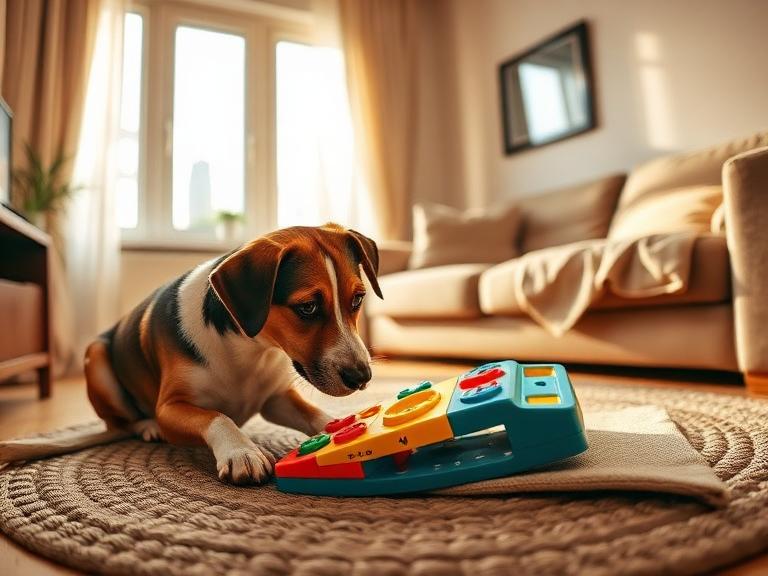
If you share your home with a dog and an apartment layout, you already know the quiet little challenges. The hallways echo. The downstairs neighbor can hear a dropped tennis ball. And your dog has about 700 square feet to explore, which they’ve memorized down to the last dust bunny.
You love your dog. You also need to work, cook, and sometimes just sit down without a nose nudging your elbow. The good news is you don’t need a yard to keep your dog happily tired. You need puzzle toys—the kind that make your dog think, sniff, and solve, all while staying in one quiet spot on the rug.
This guide is for dog lovers who live in apartments. Not trainers with perfect setups. Not influencers with sponsored gear. Just regular people who want their dogs to be calm, curious, and content without driving anyone crazy.
Why Your Apartment Dog Craves Puzzles?
Dogs are natural problem solvers. In a house with a yard, they get automatic mental exercise: watching squirrels, investigating new smells, patrolling the fence. In an apartment, most of that disappears.
When a dog doesn’t get enough mental stimulation, they don’t just get bored. They get creative. And a creative dog in a small space might:
- Chew the corner of a cabinet
- Bark at every passing shadow
- Spin in circles like a tiny, stressed-out tornado
Puzzle toys work because they replace missing environmental complexity with structured thinking. Fifteen minutes of good puzzle work can tire a dog as much as a half-hour walk. Plus, puzzles are quiet, compact, and perfect for rainy evenings or work-from-home days.
The trick is choosing the right ones.
What Makes a Puzzle Toy Truly Apartment-Friendly
Before we name names, here’s what actually matters when you live in close quarters.
Noise. Some puzzles clatter, slide, or bang. Those are fine for houses. For apartments, look for soft materials (silicone, fabric) or well-designed plastic that moves quietly.
Size. It should fit on a doormat or a small rug. If it requires floor space the size of a coffee table, it’s too big.
Mess. Avoid puzzles that require wet, sticky, or crumbly treats unless you enjoy scrubbing carpets. Dry kibble or small training treats are your friends.
Storage. Can you slide it under the couch or toss it in a drawer? Good.
Now, onto the toys that pass the test.
1. The Quiet Classic: Outward Hound Hide N’ Slide
This is the puzzle I recommend first to almost every apartment dog owner. It’s a plastic board with little sliding “bones” that move left and right to reveal treat compartments underneath.
Why dog lovers like it: It’s satisfying to watch your dog figure out the sliding motion. The first time they move a bone with their nose and find a kibble? Pure joy. Also, the sound is a soft shush, not a clatter.
Noise level: Very low
Best for: Dogs who enjoy using their paws or nose to push things
Price around: $15–25
Real-life tip: Use this during your morning coffee. Put your dog’s breakfast portion inside. They’ll work for 10–15 minutes while you wake up. Everyone wins.
2. The No-Roll Hero: West Paw Toppl
You’ve probably seen a classic Kong. The Toppl looks similar but better for apartments. It’s a wide, flat-bottomed silicone cup (actually two cups that connect). You stuff it with soft food, yogurt, or wet kibble, freeze it, and let your dog lick and chew their way through.
Why dog lovers like it: It doesn’t roll under the couch. The flat base means your dog stays in one place. No chasing, no lost toys, no crumbs in unreachable places. Plus, silicone is silent on hardwood.
Noise level: Zero
Best for: Dogs who love to lick (which is most dogs)
Price around: $15–20
Real-life tip: Keep two in your freezer at all times. Bad weather? Unexpected meeting? Grab one, hand it over, and get 20–30 quiet minutes.
3. The Surprisingly Magical Snuffle Mat
A snuffle mat looks like a shaggy rug made of fleece strips. You hide kibble deep in the strands, and your dog uses their nose to hunt every piece.
Why dog lovers like it: It’s silent. It’s calming. Watching a dog snuffle is surprisingly soothing—for you and them. The act of sniffing lowers a dog’s heart rate naturally. It’s like a weighted blanket, but for their brain.
Noise level: Silent
Best for: Anxious dogs, senior dogs, or any dog who needs to decompress
Price around: $10–30 (or you can DIY with old fabric)
Real-life tip: Use a snuffle mat after a walk. The combination of outdoor exercise and indoor sniffing creates a deeply relaxed dog. Great for evenings when you want to watch a movie in peace.
4. The Free DIY: Muffin Tin Puzzle
You don’t have to spend money. Grab a muffin tin from your kitchen. Drop a few kibbles into some of the cups. Cover each filled cup with a tennis ball or a small toy. Your dog has to remove the covers to eat.
Why dog lovers like it: It’s zero cost, endlessly variable, and you can make it harder by using different sized balls or adding more cups. Also, it’s a great way to test if your dog even likes puzzles before buying anything.
Noise level: Low (balls might bounce if your dog is enthusiastic)
Best for: First-time puzzle users or dogs who give up easily on complex toys
Price: Free
Real-life tip: Use this for dinner on days when you’re too tired for a long walk. It turns a mundane meal into a fun game.
5. The Brainiac’s Choice: Trixie Flip Board
Some dogs are too smart for their own good. If your pup solves the first four puzzles in under a minute, meet the Trixie Flip Board. It’s a wooden board with multiple steps: cones you unscrew, lids you flip, and sliders you move.
Why dog lovers like it: It’s the first puzzle that actually stumps clever dogs in a good way. Wood feels nice and doesn’t skid across floors. And watching your dog work through a sequence of actions is genuinely impressive.
Noise level: Low (soft clunks)
Best for: Herding breeds, poodles, terriers, or any dog who outsmarts every other toy
Price around: $25–35
Real-life tip: Start with the easiest compartments visible. Let your dog win a few times. Then slowly make it harder. Frustration is the enemy of fun.
Everyday Tips From One Apartment Dog Lover to Another
Having the toys is only half of it. The real magic is how you use them.
Rotate like you mean it. Dogs get bored of the same puzzle every day. Keep two or three in rotation, and hide the others in a closet for a week. When you bring a puzzle back, it feels new again.
Use regular kibble most of the time. Save the stinky liver or cheese for special occasions. Your dog will be just as happy working for their normal food, and you won’t have to worry about extra weight or an upset stomach.
Watch the first few times. Most dogs treat puzzles gently. Some treat them as chew toys. See how yours behaves before leaving them alone with a plastic puzzle.
Clean them weekly. Snuffle mats collect drool. Plastic puzzles get grimy in the crevices. A quick wash in warm soapy water (or the dishwasher for silicone) keeps things hygienic and odor-free.
Match the toy to the mood. High energy? Try the Trixie board or muffin tin challenge. Overtired and cranky? Go for the snuffle mat. The right puzzle at the right time works wonders.
Frequently Asked Questions:
Can puzzle toys replace walks?
No, and please don’t try. Your dog still needs to move their body, relieve themselves, and experience the outside world. But on days when a walk is genuinely impossible (blizzard, illness, 14-hour work deadline), puzzles are the best backup you have.
My dog gives up and walks away. What should I do?
Start easier. Much easier. Show them where the treat is. Lift the flap yourself. Let them see you hide the kibble. The goal is not to stump your dog—it’s to build their confidence so they keep trying.
Are puzzle toys safe for dogs who destroy everything?
If your dog chews through “indestructible” toys in minutes, avoid thin plastic puzzles. Stick to silicone (West Paw Toppl) or fabric (snuffle mat). For heavy chewers, always supervise and remove the toy if they start eating pieces.
How many puzzles does a dog really need?
Two or three is plenty if you rotate them. A dog with three rotating puzzles will stay engaged longer than a dog with fifteen sitting in a basket.
Will a puzzle stop my dog from barking at hallway noises?
It helps, but it’s not a cure. A mentally tired dog is generally less reactive. Try giving a calming puzzle (snuffle mat) about 15 minutes before the “noisy hour” in your building—usually right after work when everyone comes home.